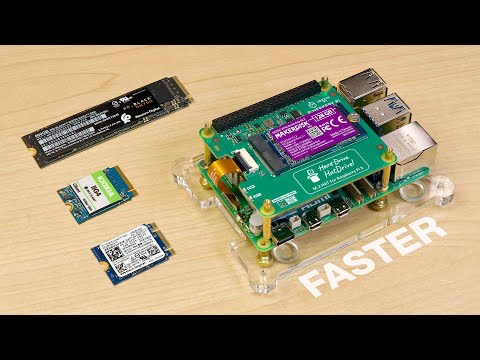
The Pineberry Pi HatDrive! is a series of HATs that use the new PCIe connection on the Raspberry Pi 5.
How fast can we get our SSD to go? Can you overclock the Raspberry Pi’s PCIe bus?
Special thanks to Pineberry Pi for sending these two evaluation boards (they did not pay any money nor had any say in the content of this video, but I still mark it ‘sponsored’ since they sent the equipment under test!). Find out more and pre-order one for your Pi at
Other things mentioned in this video (some links are affiliate links):
– NVMe SSD boot with the Raspberry Pi 5:
– Riitop NVMe USB 3.1 external adapter:
– Cytron MakerDisk 2242 NVMe SSD:
– Testing the HatDrive! Top and Bottom (GitHub issue):
Support me on Patreon:
Sponsor me on GitHub:
Merch:
2nd Channel:
Contents:
00:00 – microSD no more!
00:32 – Case compatibility and an FPC
02:32 – Flashing Pi OS to NVMe
03:49 – Pi power
04:50 – Configuring NVMe boot
06:17 – HatDrive install
08:00 – First NVMe boot
08:41 – Benchmarking Gen 2 vs Gen 3
12:01 – Debug and more PCIe exploration


ALSO today, I got the Google Coral TPU working, woohoo! Details here: https://www.jeffgeerling.com/blog/2023/pcie-coral-tpu-finally-works-on-raspberry-pi-5
And please note Pineberry Pi *also* sells the HatDrive! Bottom, a 2280-version of the board that slides just underneath the Pi 5. I didn’t show it set up in this video but it’s a really neat board that works with even more NVMe SSDs!
What’s the case you’re using here? I’ve been trying to find a base similar to the one you’ve got but can’t find anything for the Pi 5.
Ah so this is only compatible with pi 5? I’m considering buying a pi 5 or rolling the dice on trialing different sata to usb 3.0 adapters and ssds to my pi 4
Am i screwed if my ssd connector is broken?
Hey Jeff, great upgrade to NVMe. What about cooling, though? NVMe drives tend to get hot during long workloads.